Glossary · Sectors
Technology centres and universities: what to watch in order to compete for funding and transfer
For a technology centre or a university, technology watch is the systematic monitoring of calls, funded projects, consortia, publications, patents and the needs of the industry it transfers to. In October 2026 the last two years of Horizon Europe coexist, with about €14.8 billion for 2026 and 2027, and the negotiation of the 2028–2034 framework programme, proposed with €175 billion. Those who follow these signals arrive at calls with partners and a proposal ready.
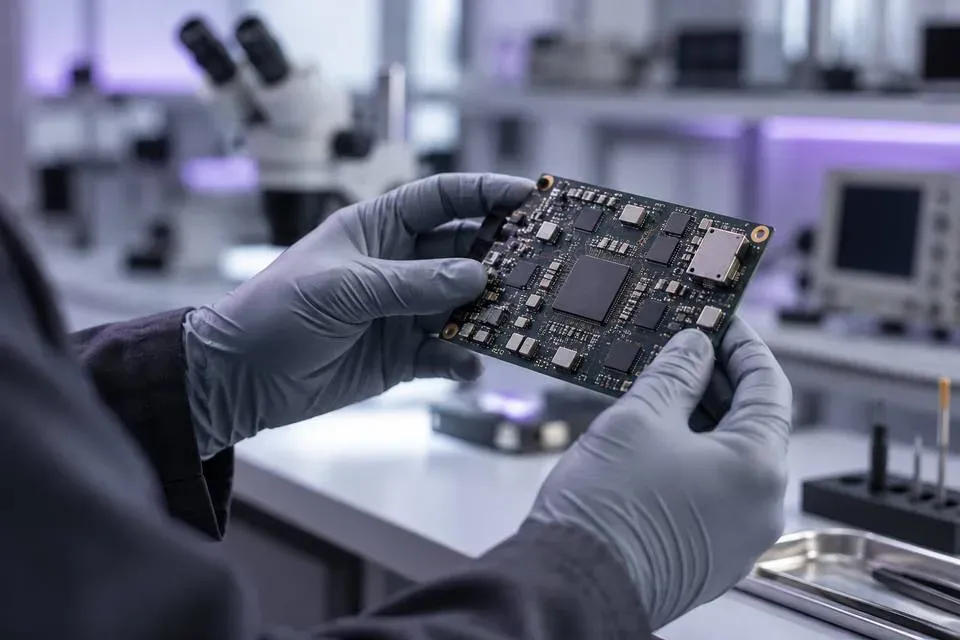
R&D Validating a component in the laboratory
What is changing in European and national funding for R&D?
Horizon Europe, the EU’s framework programme for research and innovation for 2021–2027, has an indicative budget of €93.5 billion and is organised in pillars: Excellent Science, Global Challenges and European Industrial Competitiveness with six clusters, and Innovative Europe, plus a part to widen participation[1][2]. For 2026 and 2027, €500 million was added, bringing the total to about €14.8 billion over those two years[2].
The next programme is already shaping strategies: the Commission proposed it on 16 July 2025 with €175 billion, four pillars (Excellent Science, Competitiveness and Society, Innovation, and the European Research Area) and a close link with the new European Competitiveness Fund[3]. It is still under negotiation within the 2028–2034 multiannual financial framework.
In Spain, Law 17/2022 amended the Science, Technology and Innovation Act (Ley 14/2011) so that transfer achievements count in the selection and promotion of research staff[4], and the Commission has recommended a code of good practice for co-creation between industry and academia[5]. Transfer is already part of what is assessed.
Which sources to watch in a technology centre or a university
Each type of source answers a different question. These are the main ones, with reference public bodies and databases:
| Type of source | Real examples | What it answers |
|---|---|---|
| European calls | The Commission’s Funding & Tenders Portal, the single entry point to Commission funding[6]; Horizon Europe work programmes. | What will be funded, with what budget and by when. |
| Funded projects and results | CORDIS: projects, participants, publications and summaries of results of EU-funded research[7]. | Who wins, with which partners and on which topics; what is already covered. |
| State instruments | CDTI: call calendar, R&D Projects, Cervera technology transfer projects and the national contact points for Horizon Europe[8]. | Which aid can drive companies’ demand towards the centres. |
| Official gazettes | The BOE and regional gazettes: regulatory bases, calls and resolutions. | Formal requirements, deadlines and beneficiaries. |
| Patents and literature | Espacenet, the OEPM (Spanish Patent and Trademark Office), bibliographic databases of each discipline. | State of the art, leading groups and freedom to operate. |
| Industrial demand | Company websites and press releases, tenders with an R&D component and public procurement of innovation. | What problems industry has and who is solving them. |
What decisions does a centre take with watching?
- Choosing which call to go for. Comparing the topic with projects already funded on CORDIS avoids presenting what another consortium already covers, and lets you argue the advance over the state of the art.
- Forming a consortium. See with whom the reference groups coincide in earlier projects, and which industrial partners appear again and again.
- Targeting the offer at companies. In CDTI’s Cervera projects, for example, the company must contract at least 10% of the approved budget with knowledge-generating centres[9]: following those calls and the priority technologies shows which companies will be looking for a technology partner.
- Positioning lines for the next framework programme. Strategic guidance documents, missions and European partnerships anticipate topics before the calls do.
- Protecting and valorising results. Watching patents in the line before publishing or licensing.
How to organise watching in a centre with many groups
- Start from the centre’s strategic lines, not from the individual interests of each group.
- For each line, define its calls, its academic competitors, its target industrial partners and its technologies.
- Separate what is common (calls, scientific policy) from what is specific to each group, so as not to duplicate work.
- Have the project office and the technology transfer office validate and share what arrives with the groups affected.
- Keep what has been validated with its source: when a researcher changes project or leaves, the knowledge stays in the centre.
Common mistakes
- Learning of a call when it opens, with no time left to form a consortium.
- Watching only publications and not funded projects, which show where the money goes.
- Treating industrial demand as separate from scientific watching.
- Relying on people’s memory to know what was submitted, with whom and with what result.
How Innguma works with technology centres and universities
Innguma monitors news and websites, patents, regulation and the BOE, tenders, competitors’ websites and specialist sources. In Factory, the space where Innguma processes and structures signals, the AI groups duplicates and classifies each signal by category, technology, entity, type of event, place and tone, so that one call or project can be browsed by technology or by entity. People decide what is watched, what is published and who receives it, and what is validated is kept in the Library, from which newsletters are prepared by line or by group. When the next call opens, the centre already knows what was funded, who took part and what has changed since.
Use case
How the day-to-day changes
- Each group follows its own calls and nobody sees the full map.
- Consortia are formed in a rush once the call is already open.
- What was learnt from one proposal is not reused in the next.
- When reviewing the inbox
A new work programme or a CDTI call arrives classified by technology and by the centre's line, alongside the projects already funded on that topic.
- Monthly
A newsletter by strategic line with calls, awarded projects, publications and industry moves, each signal with its source.
- Before preparing a proposal
In the Library, the topic's history: who has won, with which partners, and what the team commented last time.
Calls are seen from the work programme, not from their opening.
With the history of projects and partners on each topic.
What is validated stays in the centre even when people change.
- Monitoring of news and websites, the BOE and regulation, patents, tenders and specialist R&D sources.
- AI classification by category, technology, entity, type of event, place and tone, with the source always linked.
- Library with tags and comments, and newsletters by line or group prepared from it.
The scientific strategy and the decision to bid belong to the centre. Innguma gathers, organises and keeps; the judgement is that of your researchers and managers.
- A watch on work programmes and calls in your two main lines
- A watch on funded projects and consortia of your reference centres
- A watch on business calls that may generate demand for contracted R&D
Illustrative example of a typical use.
Sources and references
- [1] Regulation (EU) 2021/695 establishing Horizon Europe. EUR-Lex. 2021
- [2] European Commission. Horizon Europe: structure, budget and access to calls
- [3] European Commission. Proposal for Horizon Europe 2028–2034. 16 July 2025
- [4] Law 17/2022, of 5 September, amending Law 14/2011 on Science, Technology and Innovation. Spain's Official State Gazette (BOE). 2022
- [5] Commission Recommendation (EU) 2024/774 of 1 March 2024 on a code of good practice for co-creation between industry and academia in knowledge valorisation. EUR-Lex
- [6] European Commission. Funding & Tenders Portal
- [7] CORDIS, EU-funded research results
- [8] CDTI. EU Framework Programme for Research and Innovation: national contact points
- [9] CDTI. Cervera Technology Transfer R&D Projects